

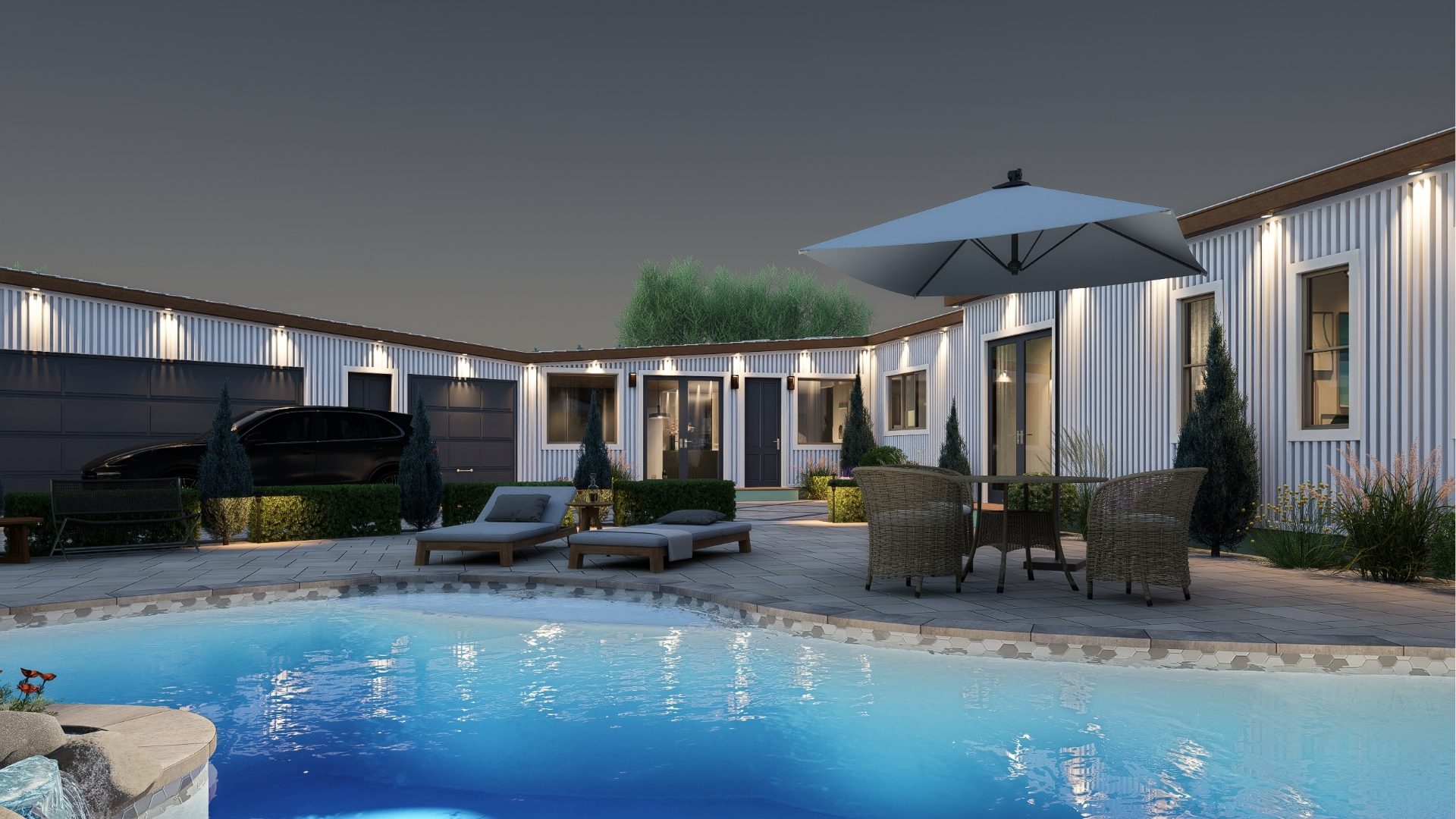

A great 3D landscape rendering does more than display terrain and vegetation — it tells a story, evokes a mood, and convinces the viewer they could step right into the scene. Whether you’re a game environment artist, an architectural visualizer, or a hobbyist exploring digital art, understanding what separates an average render from a breathtaking one is essential.
In this guide, we’ll break down the core elements that define exceptional 3D landscape rendering, along with practical tips you can apply to your own projects.
1. Realistic and Purposeful Lighting
Lighting is arguably the single most important factor in landscape rendering. It shapes mood, defines depth, and guides the viewer’s eye.
- Time of day matters. Golden hour lighting adds warmth and long shadows that add drama, while overcast lighting creates a soft, even look suited for moody or atmospheric scenes.
- Global illumination (GI) simulates how light bounces off surfaces, producing natural color bleeding and soft shadow transitions that flat lighting simply can’t replicate.
- Volumetric lighting, such as god rays through trees or fog catching sunlight, adds a cinematic quality that instantly elevates a scene.
A render with technically perfect terrain but flat, generic lighting will always look less convincing than a simpler scene lit with intention.
2. Believable Terrain and Texture Detail
Terrain is the foundation of any landscape scene, and its quality is judged at multiple viewing distances.
- Macro shape — hills, valleys, and elevation changes should follow natural erosion patterns rather than looking artificially smooth.
- Mid-range detail — rock formations, dirt paths, and texture blending between grass, soil, and stone need to transition naturally.
- Micro detail — close-up textures (using normal maps, displacement, and tessellation) prevent surfaces from looking flat when the camera gets near.
Height maps, procedural generation tools, and photogrammetry scans are commonly used to build terrain with this level of authenticity.
3. Thoughtful Composition
Even a technically flawless landscape can fall flat without strong composition. Great renders use classic visual design principles:
- Rule of thirds to place focal points naturally
- Leading lines (rivers, roads, tree lines) to draw the eye through the scene
- Foreground, midground, and background layering to create depth and scale
- A clear focal point — a lone tree, a cabin, a mountain peak — that anchors the composition
Without composition, even the most detailed terrain can feel like a random patch of ground rather than a designed scene.
4. Natural Vegetation and Ecosystem Variety
Nothing breaks immersion faster than repetitive, copy-pasted trees and bushes. Great landscape renders use:
- Vegetation variation in size, rotation, and species to avoid obvious repetition
- Density gradients — thicker foliage near water sources, sparser growth on rocky slopes
- Wind and motion cues, even in still renders, through subtly bent grass or leaning trees
- Ground clutter like fallen leaves, small rocks, and undergrowth that ties vegetation into the terrain
Procedural scattering tools help place thousands of assets efficiently while maintaining natural randomness.
5. Atmosphere and Environmental Effects
Atmosphere is what separates a “rendered scene” from a “believable world.”
- Fog and haze add depth cues and realism, especially over long distances
- Sky and cloud systems should match the lighting setup, not feel like a static backdrop
- Weather effects — mist, rain, or dust — can dramatically change the emotional tone
- Color grading ties the entire scene together, ensuring highlights, midtones, and shadows feel cohesive
6. Scale and Proportion
Landscapes need reference points to communicate scale convincingly. Without them, mountains can look like hills and forests can look like shrubbery.
- Include recognizable objects (buildings, vehicles, characters) to ground the scale
- Use atmospheric perspective — distant objects should desaturate and lose contrast
- Vary object sizes realistically; uniform tree heights or rock sizes read as artificial
7. Efficient, High-Quality Rendering Techniques
Great visuals also depend on technical execution:
- Ray tracing or path tracing for accurate reflections, shadows, and light bounces
- Level of detail (LOD) systems to maintain performance without sacrificing close-up quality
- High-resolution textures paired with proper UV mapping to avoid stretching or tiling artifacts
- Post-processing — bloom, depth of field, and subtle chromatic aberration — to mimic real camera characteristics
Popular tools for achieving this include Unreal Engine, Blender (Cycles), Vue, World Machine, and Gaea for terrain generation.
8. Emotional Storytelling
The best landscape renders aren’t just technically accurate — they make you feel something. A misty forest at dawn suggests solitude. A sunlit valley with a winding path suggests adventure. A storm rolling over jagged cliffs suggests danger or power.
Before rendering, ask: What mood am I trying to create, and does every element in this scene support that mood?
FINAL THOUGHTS
Great 3D landscape rendering is the result of layered decisions — lighting, terrain detail, composition, vegetation, atmosphere, scale, and technical execution all working together. No single element makes a render exceptional on its own; it’s the harmony between them that creates a landscape viewers want to explore.
Whether you’re building environments for games, architectural visualization, or personal art, mastering these fundamentals will consistently elevate the quality of your work.