

A homeowner visits your website, looks through your projects, and schedules a conversation. They like what they see, but they may also be talking with other contractors.
How do you give them a clear reason to choose your company?
For landscape contractors, pool builders, and outdoor living professionals, a practical place to start is the project presentation. This is where you can demonstrate how you think, how well you understand the homeowner, and how you plan to bring the project together.
To differentiate your contracting business, make your expertise easy to see before construction begins.

Make Your Difference Specific
Claims about quality, experience, and customer service need something concrete behind them.
Think about the projects your team handles well. Perhaps you excel at making compact backyards feel useful, coordinating complete outdoor living spaces, or updating existing pool areas.
Describe that strength in language a client can recognize. Then show evidence.
- Thoughtful design: Explain how the layout addresses the homeowner’s priorities.
- Relevant experience: Walk through a similar completed project.
- Attention to detail: Show how selected materials and project details are documented.
- Clear communication: Explain who handles questions and what happens next.
A homeowner should leave the conversation with specific reasons to remember your business.
Ask Questions That Shape the Project
Before presenting a solution, understand how the homeowner wants to use the space. Go beyond a list of requested features. Ask:
- Where do you spend the most time outside now?
- What makes the current space inconvenient?
- How do you want the yard to work when guests visit?
- Which areas need more shade, privacy, or room to move?
- How much upkeep feels realistic for your household?
During the design review, explain how your recommendations address the priorities the homeowner shared.
Choose Portfolio Examples That Fit the Client
A portfolio becomes more useful when you explain why a project is relevant.
For a homeowner planning a small backyard renovation, choose examples that show how you handled limited space. For a pool project, show how the pool, surrounding patio, shade, and circulation work together.
- Walk through the original challenge, the decisions your team made, and the finished result. Describe outcomes you can support with the project record or the client’s feedback.
- You might explain how a seating area was repositioned to open a walking route, or how a material choice helped tie an addition to the existing home.
- Clearly label renderings and completed-project photos. Each has a useful role: a rendering demonstrates a design concept, while a finished photo shows completed work.
The goal is to help homeowners recognize relevant experience and understand how you approach problems similar to theirs.
Use 3D Landscape Design to Make Your Ideas Clear
A custom outdoor living project involves relationships that can be difficult to explain through a written description alone.
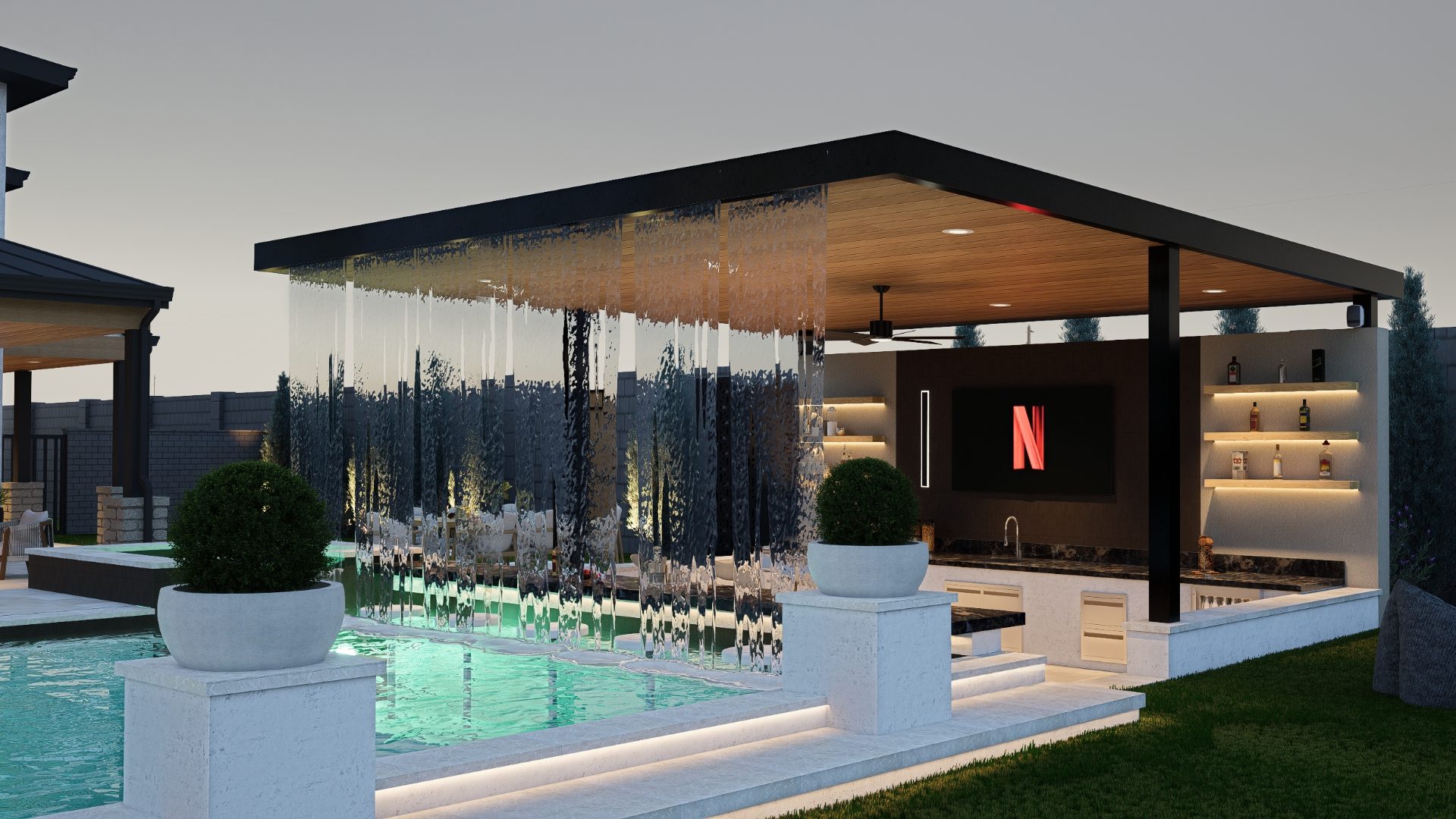
How will the pergola relate to the house? What will the pool look like from the back door? How will the dining area connect to the outdoor kitchen? A useful 3D landscape design presentation gives you a way to discuss those questions visually.
- Choose views that explain the project. An overhead view can show the overall layout. A view from the house can show how the proposed features relate to the spaces the homeowner uses every day.
- Then guide the conversation. Explain your recommendations, invite feedback, and identify decisions that still need attention. The design now has a clear connection to the client’s goals.
During initial conversations, use portfolio examples and sample presentations. Develop custom designs through an agreed design scope so your presentation process remains sustainable.
Connect the Design to a Clear Construction Scope
A strong presentation should help the homeowner understand what the project includes.
Use the design to introduce the details that shape the work: materials, feature locations, dimensions, and the relationship between new construction and existing conditions.
Appropriate 2D construction plans can support estimating and coordination by documenting these details. The package should match the project and the stage of development. Identify any information that still needs to be confirmed. Homeowners should be able to understand:
- Which features are included.
- Which selections remain open.
- What assumptions the proposal relies on.
- What additional work requires separate review.
- How requested changes will be handled.
Clarity gives clients something concrete to evaluate when comparing contractors. It also gives you a useful way to discuss the care behind your proposal.
Make the Next Step Easy to Understand
Follow each meeting with a short recap of the decisions, open questions, and next action.
Tell the homeowner who will follow up and when. If you need information from them, explain what it is and why it matters. Set expectations your team can consistently meet. Keep drawings, selections, and approvals organized so everyone can identify the current version.
These habits give substance to your promise of good service.
Build a Presentation Process Your Team Can Repeat
Consistency matters as your business grows. Give your team a simple structure they can adapt to each project. A practical presentation sequence is:
- Restate the homeowner’s priorities. Confirm that you are solving the right problems.
- Explain the overall layout. Show how the main spaces connect.
- Walk through key decisions. Connect design choices to the client’s intended use.
- Review the scope. Explain what is included and what still needs a decision.
- Agree on the next action. Make responsibilities and follow-up clear.
Keep the presentation focused. Choose the drawings and views that help explain the project, and leave room for questions.
Help Homeowners See the Value of Working With You
Your experience becomes more meaningful to a prospective client when they can see how it applies to their property.
A relevant portfolio builds context. A thoughtful design explains your recommendations. Clear plans and a well-defined scope show how the project is being developed. Reliable communication helps the homeowner follow the process.
These are practical improvements you can begin making in your next sales conversation.