
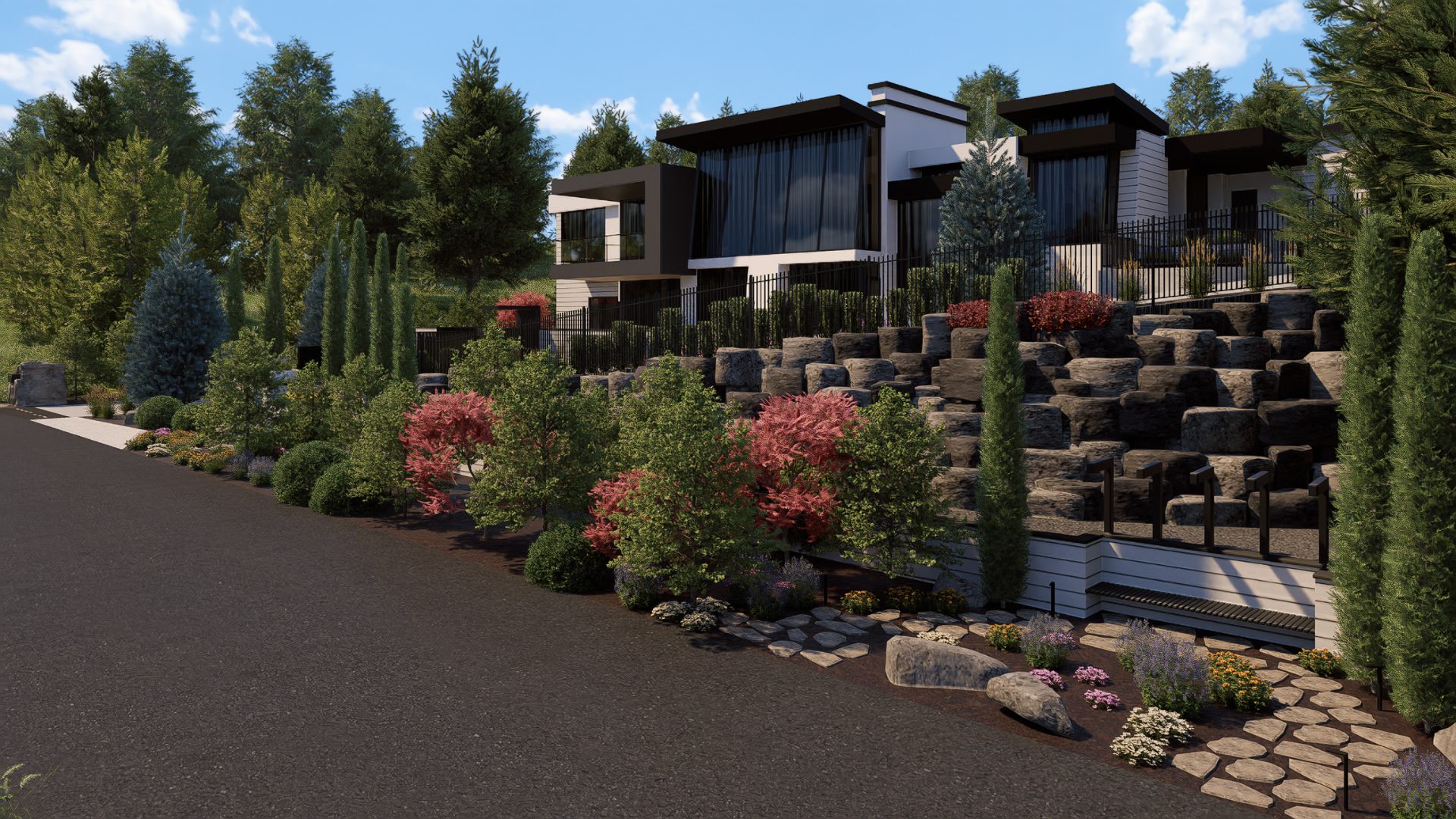

A growing project list is good news until design becomes the bottleneck. Proposals wait, revisions pile up, and your team struggles to give every homeowner a clear picture of the finished project.
For landscape contractors, comparing outsourcing landscape design vs. hiring in-house comes down to cost, dependable production capacity, and how much daily involvement your business needs.
Outsourcing can suit companies with changing workloads or a need for several design specialties. An in-house designer can be a strong fit when demand is steady and the role includes close coordination with customers and crews. Some businesses benefit from combining both.
Here is how to compare the options using the work your company actually needs.
Outsourced vs. In-House Landscape Design at a Glance
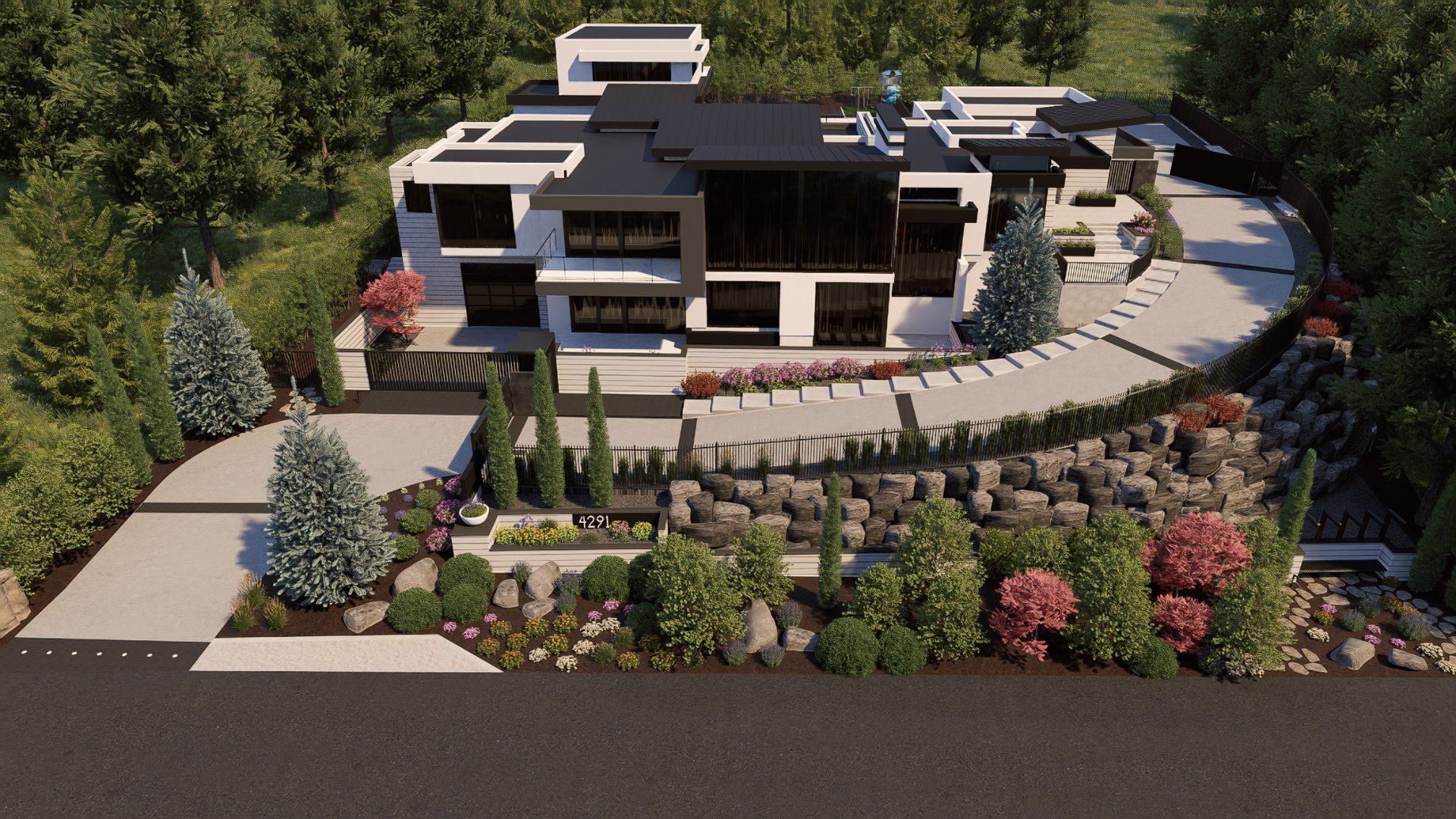
Outsourcing landscape design gives your company access to outside design support through project fees, hourly fees, or a recurring membership. Depending on the provider, that support may include modeling, rendering, and drafting. Available capacity depends on your agreement, active project limits, and the team’s schedule.
Hiring an in-house designer adds a dedicated employee to your business. You cover salary, employer costs, equipment, software, and management. The designer can work closely with customers and crews, while production capacity depends on their available hours, skills, and project complexity.
Outsourcing can fit variable demand or overflow work, especially when the agreement allows you to adjust production volume. Hiring can fit steady demand and a role that includes daily involvement in your business. Staffing costs continue during slower periods, while outsourced memberships may also carry minimum commitments.
What Does an In-House Landscape Designer Really Cost?
Hiring a designer gives your business a dedicated team member who can learn your preferences, communicate with customers, and work closely with your construction team. The cost includes more than salary.
Build your hiring budget around the actual role, experience level, and local market. Then add employer costs, software, equipment, onboarding, and management time.
Management time represents a business cost even when it does not create a separate invoice. Hardware is spread across its useful life in this example. Paid leave also affects available production time. If it is already included in the salary assumption, avoid adding the same wages again as a separate expense.
An internal designer may contribute beyond production through sales meetings, site visits, estimating, or crew support. Include the value of those responsibilities when deciding whether the hire makes sense.
How Much Does Outsourcing Landscape Design Cost?
An outsourced landscape design service may charge by project, by hour, or through a monthly membership with a defined level of production.
The useful comparison starts with the scope you are buying. A patio concept, a detailed pool and outdoor kitchen design, and a complete package of visuals and plans require different amounts of work.
Before comparing quotes, confirm:
- Which 3D views, videos, and 2D drawings are included.
- How many revision rounds are covered.
- Whether site modeling and project setup are included.
- How additional features or scope changes are charged.
- What minimum commitments, monthly limits, and overage fees apply.
Your own team will still spend time gathering site information, reviewing designs, and organizing homeowner feedback. Include that time in the outsourcing budget.
A membership can make spending predictable, but unused design slots still have a cost. Project pricing can fit occasional demand, while a recurring arrangement may suit a regular flow of work.
Compare the Cost Per Completed Design
A practical starting point is:
Cost per completed design = total design operating cost ÷ comparable design packages completed
For an internal team, include salary, employer costs, tools, and supervision. For outsourcing, include provider fees, extras, and your team’s coordination time. Use the same deliverables on both sides. For example, compare a 3D concept, presentation images, up to two revision rounds, and a clearly defined 2D plan scope.
Using the hypothetical in-house budget above, assume the employee can complete up to eight such packages per month. Now assume an outsourced package costs $4,000 per month for up to eight comparable designs, plus $1,000 in internal coordination and extras.
Here is how those fixed monthly costs compare at two workload levels:
- Four completed designs per month: The in-house cost is $2,125 per design. The outsourced cost is $1,250 per design.
- Eight completed designs per month: The in-house cost falls to $1,062.50 per design. The outsourced cost falls to $625 per design.
These assumptions make outsourcing less expensive in this example. Different salaries, provider fees, project scopes, or internal responsibilities can change the result.
This example also shows why utilization matters. Paying for eight designs and completing four increases your effective cost per design. That applies to both an underused employee and an underused membership.
Once demand exceeds either option’s available capacity, rebuild the comparison with the cost of extra support. Dividing a fixed monthly cost by an unrealistic number of projects creates misleading savings.
Quality and Communication Affect the Real Cost
A low design fee can become expensive if your team spends hours correcting missing details or explaining the same changes repeatedly.
Give every designer a complete brief with site measurements, available surveys, photos, the homeowner’s budget, requested features, and your preferred materials. Identify existing conditions that must remain and any known site restrictions. Agree on who checks dimensions, materials, layout, and buildability before a design reaches the customer. Combine feedback into one clear revision list whenever possible.
These habits help both internal and outsourced teams. A consistent intake and review process makes it easier to judge whether capacity problems come from staffing, incomplete information, or repeated scope changes.
Build the Design Capacity Your Business Needs
Choose a design setup that fits your actual workload, required deliverables, and customer experience. Review both average months and busy periods so the arrangement can support your sales pipeline.