

Every outdoor living project begins with a leap of faith. A homeowner is about to invest a significant amount of money in something that does not exist yet, handing it to a team they have only known for a few weeks. The question running through their mind is simple: “Can I trust these people to deliver what I am imagining?”
For contractors and builders, the answer is built long before the first shovel hits the ground. It is built during design.
Strong landscape design does more than produce a beautiful plan. It creates clarity, reduces uncertainty, and gives clients concrete reasons to believe you will follow through. This guide explains how design builds client trust, and how contractors can use it to win more work and keep clients happy from first meeting to final walkthrough.

Why Client Trust Matters in Contracting
Trust affects nearly every part of your business. Clients who trust you:
- Say yes faster and negotiate less on price
- Approve plans with confidence instead of second-guessing
- Communicate openly when something changes
- Refer friends, neighbors, and family
- Return for future phases and projects
Clients who do not trust you tend to hesitate, shop around, micromanage the build, and dispute the details. In a business where reputation travels by word of mouth, trust is not a nice-to-have. It is a growth strategy.
1. Design Replaces Uncertainty With Clarity
Most client anxiety comes from not knowing. What will it look like? How will the pool relate to the patio? Will the lighting, planting, and materials work together? When those questions stay unanswered, doubt fills the gap.
A well-developed design answers them on paper before construction begins. Clients can see how the space flows, where each feature sits, and what the finished result will feel like. Clarity is the foundation of trust, and design is how you deliver it.
2. 3D Renderings Let Clients See What You See
Flat drawings require imagination, and not every client can picture a finished space from a 2D plan. When they cannot, they either guess or stay quiet and hope for the best.
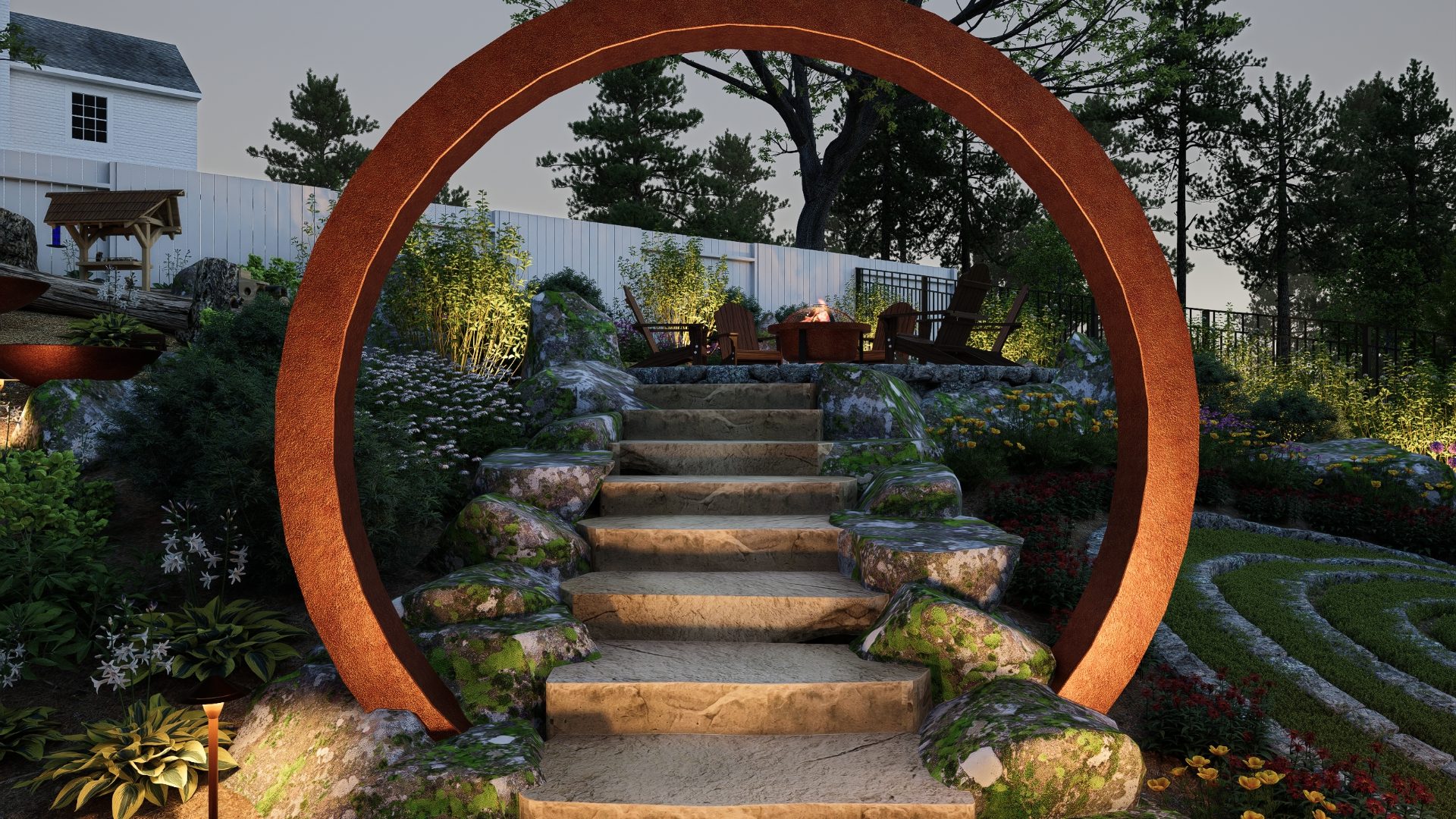
3D landscape renderings close that gap. They show the project from realistic angles, with materials, lighting, and scale that look like the real thing. Clients feel included in the process, and they can approve the design knowing exactly what they are getting.
That visual confidence signals something important: you understand their vision, and you can deliver it.
3. Accurate Plans Prove You Are Detail-Oriented
Clients may not read every dimension on a plan set, but they notice when a team is organized, thorough, and prepared. Accurate, complete, build-ready plans show that you have thought through the project, from grading and drainage to the way each element connects.
Plans that are precise lead to fewer surprises in the field, and fewer surprises lead to fewer awkward conversations about delays and added costs. Every smooth step reinforces the impression that you know what you are doing.
4. A Clear Design Process Sets Expectations Early
Trust grows when people know what to expect. A defined design process shows clients where they are, what comes next, and what is needed from them.
A strong process typically includes:
- A discovery conversation to understand goals, lifestyle, and budget
- A site review to document existing conditions
- Concept design and client review
- Refined plans and renderings
- A clear approval step before construction
- A smooth handoff into the build phase
When clients can see the roadmap, they relax. They feel guided instead of left to wonder what is happening.
5. Listening in Discovery Shows Clients They Matter
Design is one of the first places clients feel truly heard. When you ask thoughtful questions about how they want to use the space, who will use it, and what they want to feel when they are in it, you show that the project is about them, not just the build.
Great designs reflect the client’s real life, from entertaining and family time to relaxation and daily routines. When clients see their own priorities reflected in the plan, trust follows naturally.
6. Transparency Around Scope and Budget Prevents Friction
Nothing damages trust faster than surprise costs. Clear design documentation helps you define the scope, align it with the budget, and flag decisions early.
Be transparent about:
- What is included in the design and the build
- Where choices affect cost
- Which features can be phased over time
- How changes will be handled and priced
When clients feel informed instead of surprised, they see you as a partner, not a salesperson.
7. Consistency Builds a Reputation
One impressive project is nice. A consistent standard across every project is what builds a reputation. Repeatable design systems, clear deliverables, and reliable quality mean every client gets the same experience, whether they are your first customer this year or your fiftieth.
Over time, that consistency becomes your brand. Homeowners, referral partners, and fellow professionals come to trust that working with you means a predictable, professional result.
Common Mistakes That Erode Trust
- Showing up with vague proposals. Unclear scopes leave clients unsure what they are buying.
- Relying only on 2D drawings. Clients who cannot visualize the result may hesitate or change their minds later.
- Rushing discovery. Clients can tell when their goals were not fully heard.
- Hiding budget impacts. Surprise costs damage confidence quickly.
- Delivering inconsistent quality. Uneven results make it hard for clients to know what to expect.
The Bottom Line
Client trust is not built through promises. It is built through proof. Landscape design gives contractors and builders a way to show clients what is coming, explain how it will be built, and demonstrate care at every stage. Clear visuals, accurate plans, honest communication, and a consistent process turn hesitant prospects into confident clients and happy clients into repeat customers.
When clients trust the design, they trust the team behind it.