

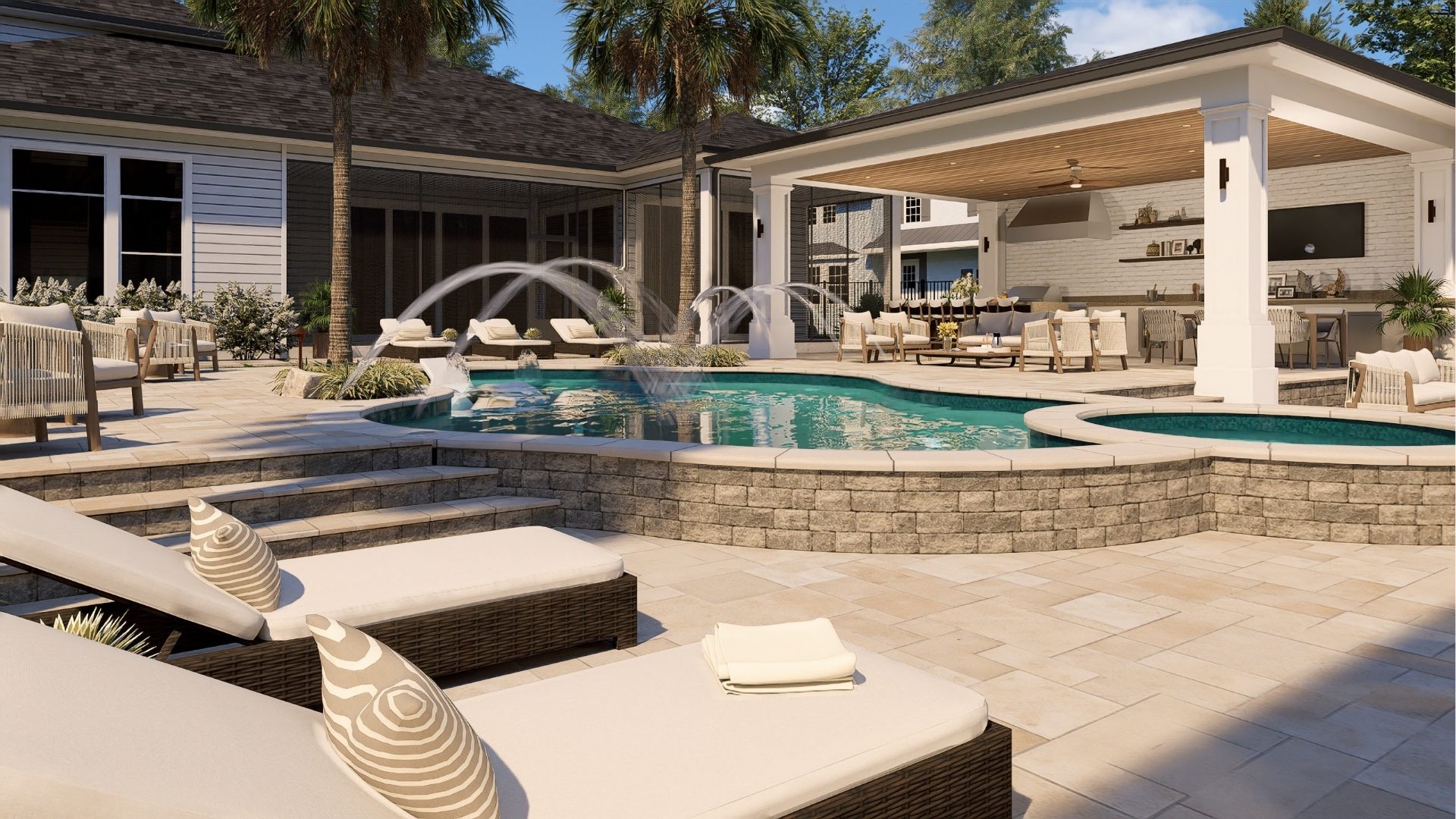

There is a reason people book vacations at resorts. The pool is not just a place to swim. It is an environment built around relaxation, with comfortable seating, lush surroundings, shade, soft lighting, and every detail arranged so guests never want to leave.
More homeowners are asking for that same experience at home. They do not just want a pool. They want a backyard that feels like a getaway, one they can enjoy every weekend without booking a flight.

What Makes a Pool Feel Like a Resort
Resort-style design is less about the pool itself and more about everything around it. A basic pool surrounded by plain concrete and a few chairs feels like a swimming hole. A resort-style pool feels like a destination.
The difference comes down to a few principles:
- Zones, not just a pool. Distinct areas for swimming, lounging, dining, and socializing
- Layers of comfort. Shade, soft seating, heat, and shelter from sun and wind
- Lush, intentional planting. Greenery that frames the space and adds privacy
- Sensory details. Sound of water, glow of lighting, and texture underfoot
- Flow. A layout that guides guests naturally from one experience to the next
When these elements work together, the pool becomes the center of a complete outdoor living experience.
1. Start With a Layout Built Around Experience
Great resort-style pools begin with a plan for how people will actually use the space. Before choosing a pool shape or finishes, think through the activities that need to happen:
- Swimming and lap play
- Lounging and sunbathing
- Dining and entertaining
- Kids playing safely
- Quiet relaxation away from the action
A freeform or organic pool shape can feel natural and relaxed, while a clean rectangular pool suits modern architecture and formal landscapes. Either style can feel like a resort when the surrounding spaces are designed with the same level of care.
Good layouts also consider sightlines. The view from the house, the patio, and the lounge areas should all feel composed, with the pool as the centerpiece and landscaping as the frame.
2. Add a Tanning Ledge and Shallow Lounge Area
One of the most recognizable resort features is the sun shelf, also called a tanning ledge. This shallow area, usually just a few inches deep, gives guests a place to lounge in the water without swimming.
A good tanning ledge offers:
- Room for in-water loungers and a few chairs
- A place for kids to play safely
- Easy access from the main pool and the deck
- Optional bubblers or jets for sound and sparkle
It turns the pool into a social space where people can chat, cool off, and relax, which is exactly how resort pools are used.
3. Include Water Features That Add Sound and Movement
Resort pools engage the senses, and water is a big part of that. Moving water adds soothing sound, visual interest, and a sense of luxury. Popular options include:
- Waterfalls and rock features that create a natural, lagoon-style look
- Sheer descents and spillways for clean, modern lines
- Scuppers and wall-mounted spouts that add architectural character
- Bubblers and deck jets that sparkle in the sun and light up at night
- Spa spillover that connects a hot tub to the main pool
The right water feature depends on the style of the project, but each one helps cover background noise and makes the space feel private and calm.
4. Design Lounge and Social Zones Around the Pool
A resort pool is never just a pool with a few chairs. The surrounding deck is designed with intention, with different areas for different moods. Consider including:
- A sun deck with space for multiple loungers in full sun
- A shaded seating area for lunch, drinks, and conversation
- A poolside bar or counter with seating for casual entertaining
- A fire feature for cool evenings and extended swimming seasons
- A quiet corner with a daybed or hammock for private relaxation
Good spacing matters here. Allow generous room around loungers, clear walkways for foot traffic, and enough space that guests do not feel crowded.
5. Create Shade With Cabanas, Pergolas, and Umbrellas
Shade is what makes a pool usable all day. Without it, the space becomes too hot by afternoon, and guests retreat indoors.
Resort-style shade options include:
- Cabanas with curtains, daybeds, and ceiling fans for a private lounge feel
- Pergolas with louvered or fabric roofs that control sun and light
- Pavilions that pair a roof structure with an outdoor kitchen or living room
- Shade sails that add modern shape and flexible coverage
- Large market umbrellas for simple, movable shade
Shade structures also become design features. They add height, frame views, and give the space a sense of architecture that makes it feel like a real destination.
6. Surround the Pool With Lush, Layered Planting
Planting is one of the biggest differences between an ordinary pool and a resort-style environment. Lush greenery softens hard edges, adds privacy, and gives the space a tropical or Mediterranean feel.
When choosing plants, think about:
- Structure. Palms, ornamental trees, and evergreen shrubs add height and year-round form
- Texture. Mix broad leaves, fine grasses, and soft groundcovers for depth
- Color. Use repeating colors for a cohesive look instead of scattered accents
- Privacy. Layer taller plants along property lines and open views
- Pool-friendly selections. Choose plants with minimal litter, tolerance for splash, and suitability for your climate
Container plantings, planters, and raised beds add flexibility and give designers a way to bring in color and seasonal interest without major changes.
7. Light the Space for Evening Atmosphere
A resort pool looks just as good at night as it does during the day. Layered lighting turns the space into an evening destination.
A strong lighting plan includes:
- Underwater pool lighting for glow and safety
- Path and step lighting around the deck and entry points
- Uplighting on trees and palms for drama and depth
- Soft ambient lighting over lounge and dining areas
- Accent lighting on water features to highlight movement and texture
Color-capable pool lights add flexibility for parties and holidays, while warm white fixtures keep the everyday look calm and inviting.
8. Choose Materials That Feel Luxurious and Stay Comfortable
Materials set the tone for the whole space. They also affect comfort, safety, and long-term maintenance. For the pool deck and surrounding areas, look for:
- Cool-to-the-touch surfaces such as light-toned pavers, travertine, or textured concrete
- Slip-resistant finishes for safety around wet areas
- Natural stone accents on walls, water features, and fire elements
- Quality coping and tile that add detail and polish at the water’s edge
- Consistent material palettes that tie the pool, deck, and outdoor living areas together
Small details, like a tile band at the waterline or a stone-clad spa wall, make a space feel custom and high end.
How Contractors and Builders Can Sell the Resort-Style Experience
Clients are not just buying a pool. They are buying the way they imagine their weekends. The strongest sales approach focuses on the experience, not the equipment.
A few ways to make the pitch stronger:
- Show the full environment in 3D. Renderings that include lounge areas, planting, shade, and lighting help clients see the finished space before construction begins.
- Sell the lifestyle. Describe the poolside dinners, weekend gatherings, and quiet mornings the design will support.
- Plan the whole site at once. A pool designed alongside landscaping, hardscape, and lighting looks more cohesive than one that grows in pieces.
- Offer phased options. Clients who cannot build everything now can start with the pool and core infrastructure, then add cabanas, kitchens, and fire features later.
- Coordinate early. Aligning pool, landscape, and structural plans before construction avoids costly changes and delays.
When the design is complete and thoughtful, clients feel confident in the investment, and builders end up with projects that photograph beautifully and generate referrals.
Build a Backyard Retreat That Feels Like a Getaway
A resort-style pool is about more than water. It is about creating an environment where people want to slow down, gather, and stay awhile. With the right layout, features, planting, and lighting, a backyard can deliver that feeling every day of the year.