

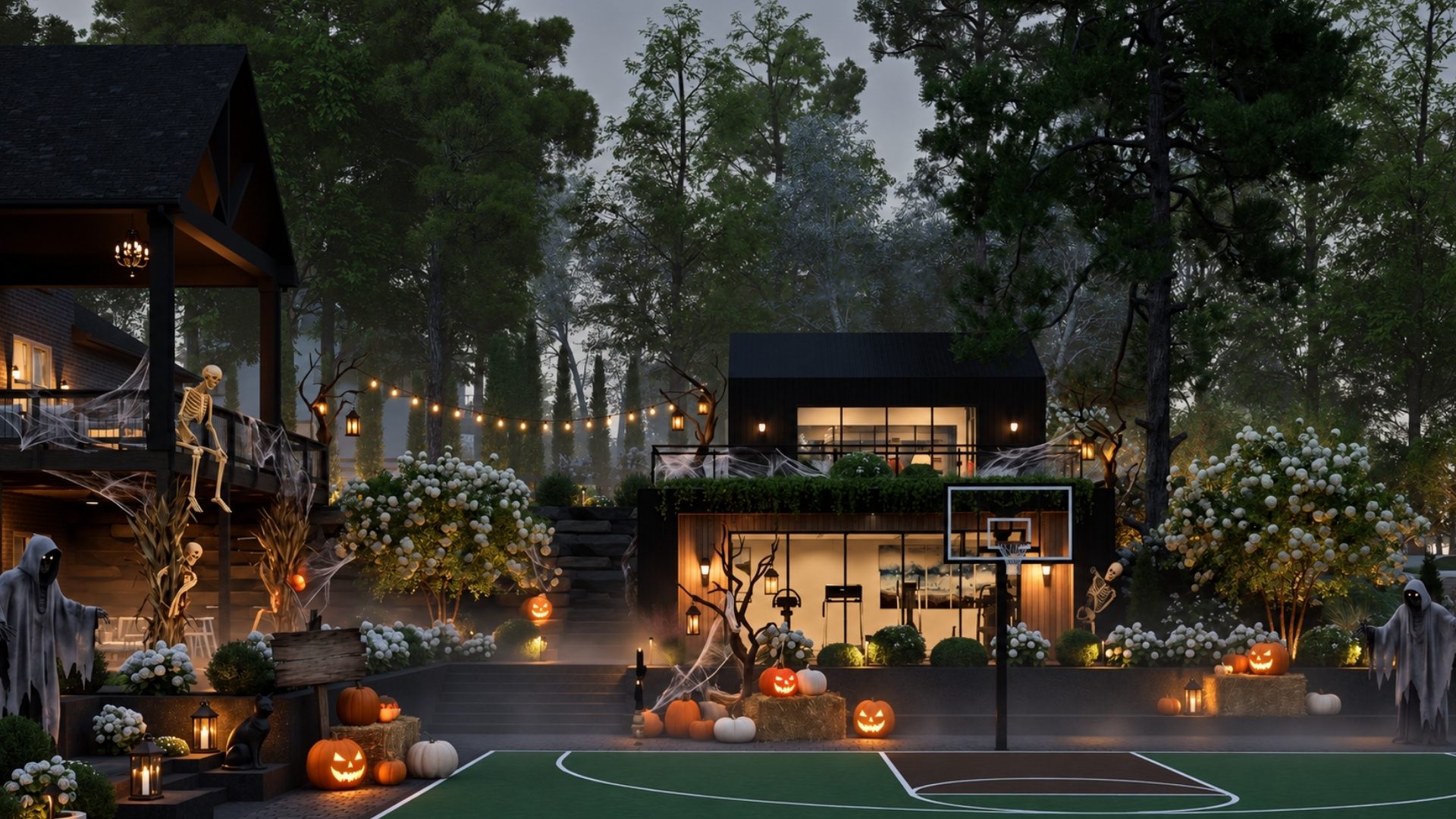

Halloween has a way of reminding us how a backyard looks after the sun goes down. A yard that looks great at noon can feel flat, dark, or even unwelcoming once the daylight fades. And a yard with the right lighting and design can feel like a completely different place: warm, dramatic, and impossible to ignore.
That is the real trick behind a backyard that turns heads after dark. It is not about spooky props or one-night decorations. It is about design choices that shape how a space looks, feels, and functions at night. The treat is a yard that homeowners use more, enjoy more, and love showing off.

Why Nighttime Design Deserves Its Own Plan
Most backyards are designed for daytime. Layouts, plantings, and materials all get judged in full sunlight, and lighting is often treated as an afterthought. The problem is that for much of the year, especially in fall and winter, people see their yards mostly at night.
A backyard designed with nighttime in mind gives homeowners more usable hours, more safety, and more atmosphere. It also gives builders a way to stand out, because a lighting plan that was designed with the project almost always looks better than one added later.
The Tricks: Lighting Techniques That Transform a Yard
Great nighttime design relies on a few core techniques. Used together, they add depth, drama, and personality to a space.
1. Uplighting for Drama
Placing fixtures at the base of trees, tall grasses, columns, or stone walls and aiming them upward creates a bold, sculptural effect. Uplighting highlights texture and form, and it makes mature trees look like living art.
Tips for using it well:
- Choose a few standout subjects instead of lighting everything
- Vary fixture angles and beam widths to avoid a flat look
- Use shielded fixtures to reduce glare for guests and neighbors
2. Downlighting and Moonlighting for Soft Glow
Fixtures mounted high in a tree and aimed downward mimic natural moonlight. The soft, dappled light falls across patios, lawns, and planting beds and creates a calm, natural look that feels effortless.
This technique works especially well over seating areas and walkways, where it adds both beauty and visibility without harsh brightness.
3. Silhouetting and Shadowing
Lighting a wall or fence from the front of a plant creates a dramatic shadow on the surface behind it. Lighting from behind a sculptural shrub, ornamental tree, or architectural feature creates a bold silhouette.
Both techniques make a space feel artistic and layered, and they are perfect for the moody look that suits the season.
4. Path and Step Lighting for Safety and Flow
Good lighting does not just look nice. It keeps people safe. Low-voltage path lights, step lights, and recessed fixtures guide guests along walkways and over grade changes.
For best results:
- Light every step and level change clearly
- Space fixtures evenly so there are no dark gaps
- Keep fixtures low and shielded to avoid blinding guests
The Treats: Design Details That Complete the Look
Lighting does the heavy lifting, but a few other design elements bring the nighttime scene together.
1. Fire and Glow
A fire pit, fireplace, or fire table adds movement and warmth that no fixture can match. The flicker of real flame gives a space life, and it gives guests a natural place to gather. Pair it with lantern-style lighting nearby for a layered, cozy effect.
2. Water That Catches the Light
Water features reflect and multiply light. A lit fountain, a water wall, or a reflecting pool adds sparkle and sound, and it turns a quiet corner into a focal point. Submersible fixtures and carefully aimed spotlights bring out the movement of the water.
3. Plants and Materials That Look Great at Night
Some plants and materials come alive after dark:
- Ornamental grasses that catch light and sway in the breeze
- Pale foliage and white blooms that reflect moonlight and low-level fixtures
- Textured stone and brick that show depth under grazing light
- Dark-toned hardscape that creates a rich contrast with lit plantings
- Sculptural trees with interesting branching that look striking when lit from below
Choosing materials with the nighttime view in mind helps your lighting work harder with fewer fixtures.
Choosing the Right Light Color and Controls
Two details separate a polished lighting design from an average one: color temperature and controls.
- Warm white light in the 2700K to 3000K range feels inviting and flatters plants, wood, and stone
- Color-capable fixtures let homeowners shift to orange, amber, or purple for Halloween and return to warm white the next day
- Timers and smart controls let lighting turn on automatically and allow different scenes for dinner, parties, and quiet evenings
- Dimming adds flexibility and helps avoid over-lighting the space
Planning wiring, transformers, and control systems from the start makes it easy to add or change fixtures later without tearing up the landscape.
Common Nighttime Lighting Mistakes to Avoid
Even good projects can fall short when lighting is rushed. Watch out for these common problems:
- Over-lighting. Too many bright fixtures flatten the scene and wash out the mood
- Glare. Exposed bulbs and poor aiming blind guests and annoy neighbors
- Dark gaps. Uneven spacing leaves risky spots along paths and steps
- One-note lighting. A single type of fixture makes a yard look flat and flood-lit
- Ignoring maintenance. Fixtures should be easy to reach, adjust, and service as plants grow
A good design balances light and shadow. Darkness is part of the effect, and the contrast is what makes lit features stand out.
Make Your Backyard the Treat of the Neighborhood
Halloween is a fun excuse to think about nighttime design, but the benefits last all year. With the right lighting, materials, and gathering features, a backyard becomes a place that feels special long after the decorations come down.